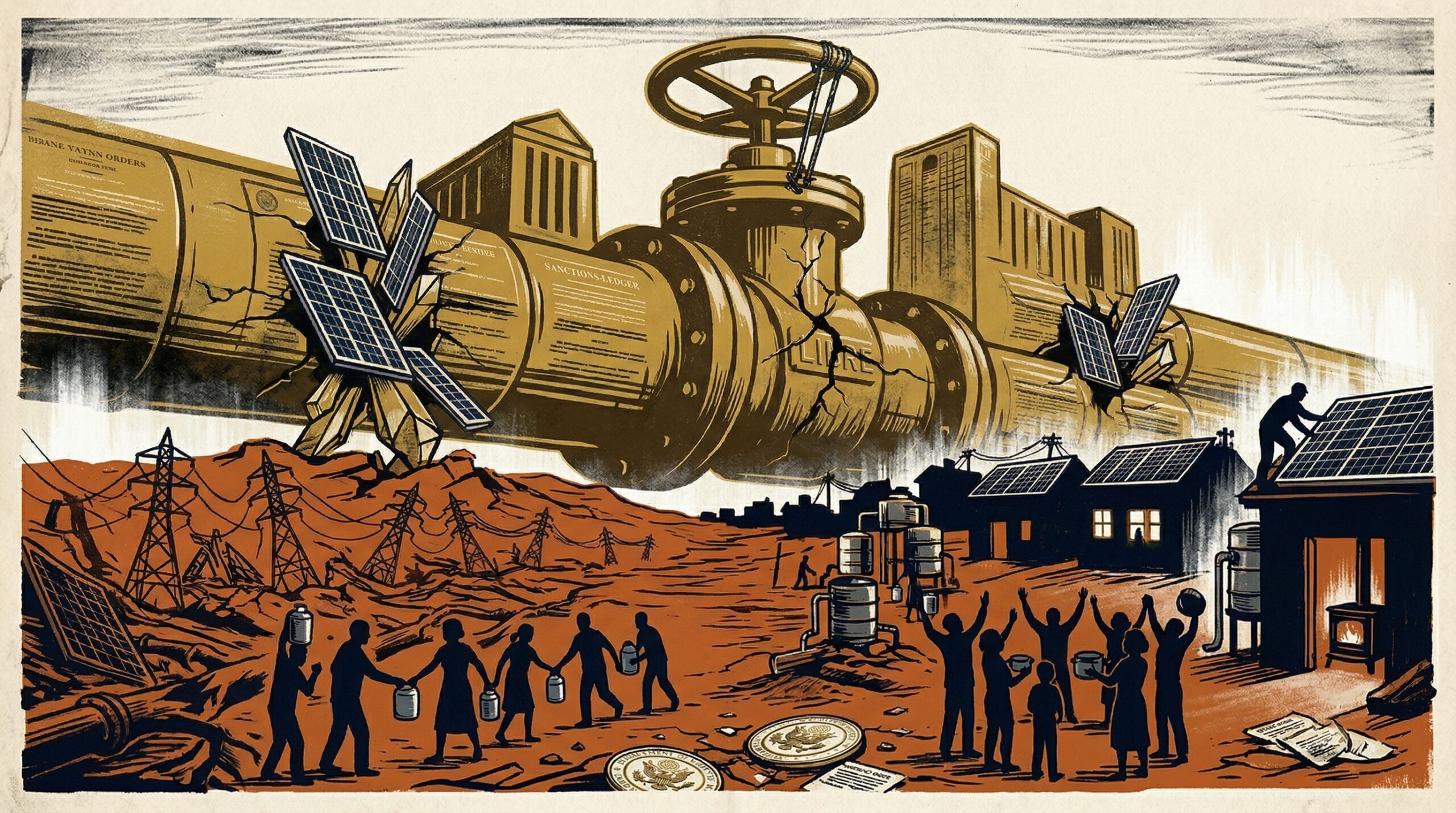
THE ASSAY: THE CUBA OIL BLOCKADE & GRID COLLAPSE
I. THE OMEN
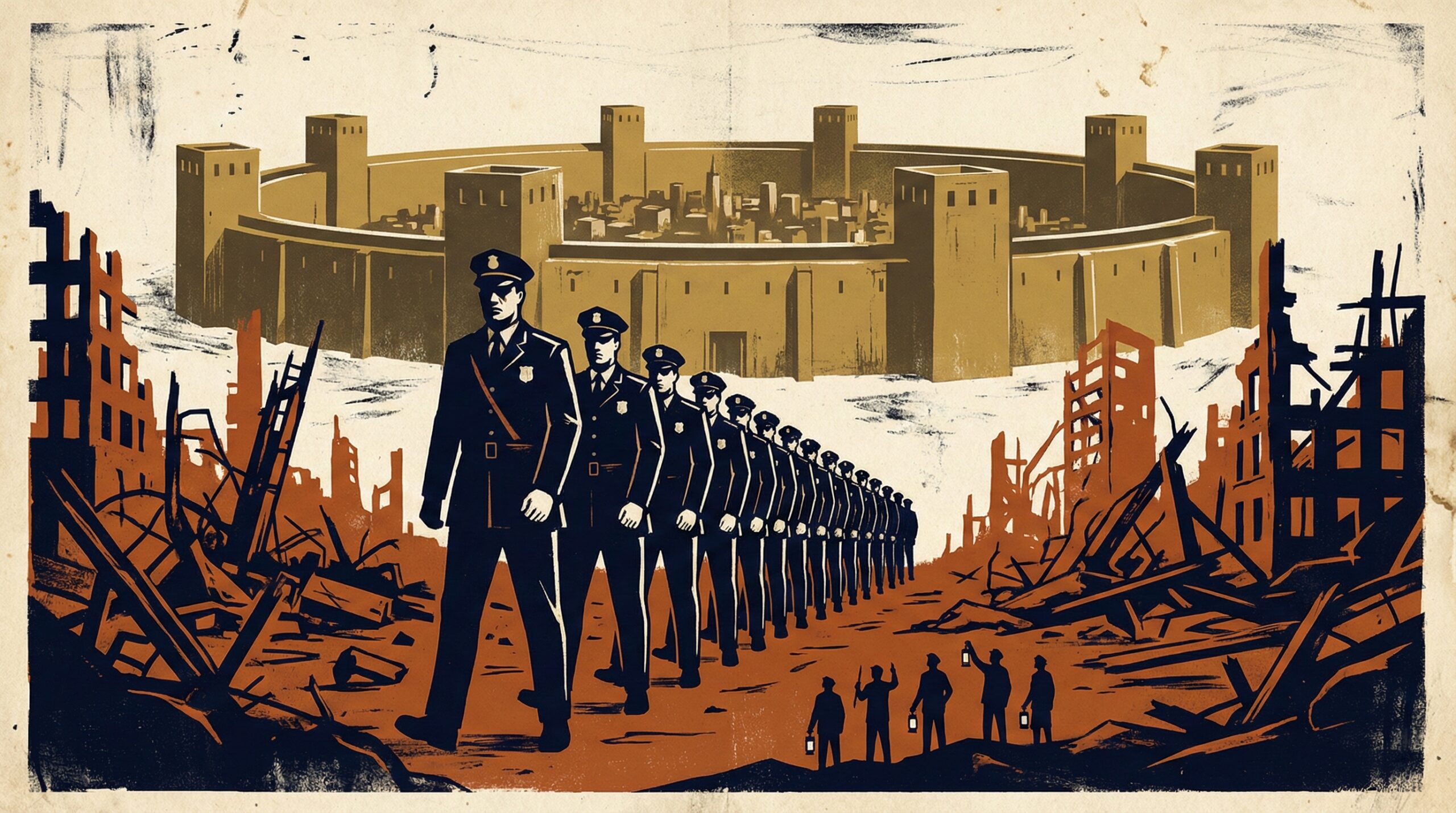
The lights went out in Cuba not because the wiring failed, but because someone upstream shut off the fuel valve and welded it closed — then told 11 million people the darkness was their own government’s fault. This is the first effective blockade of Cuba since the Cuban Missile Crisis, and the machine producing it was built in three deliberate stages over ten weeks.
II. THE PRISM
The Loom (The Mechanics)
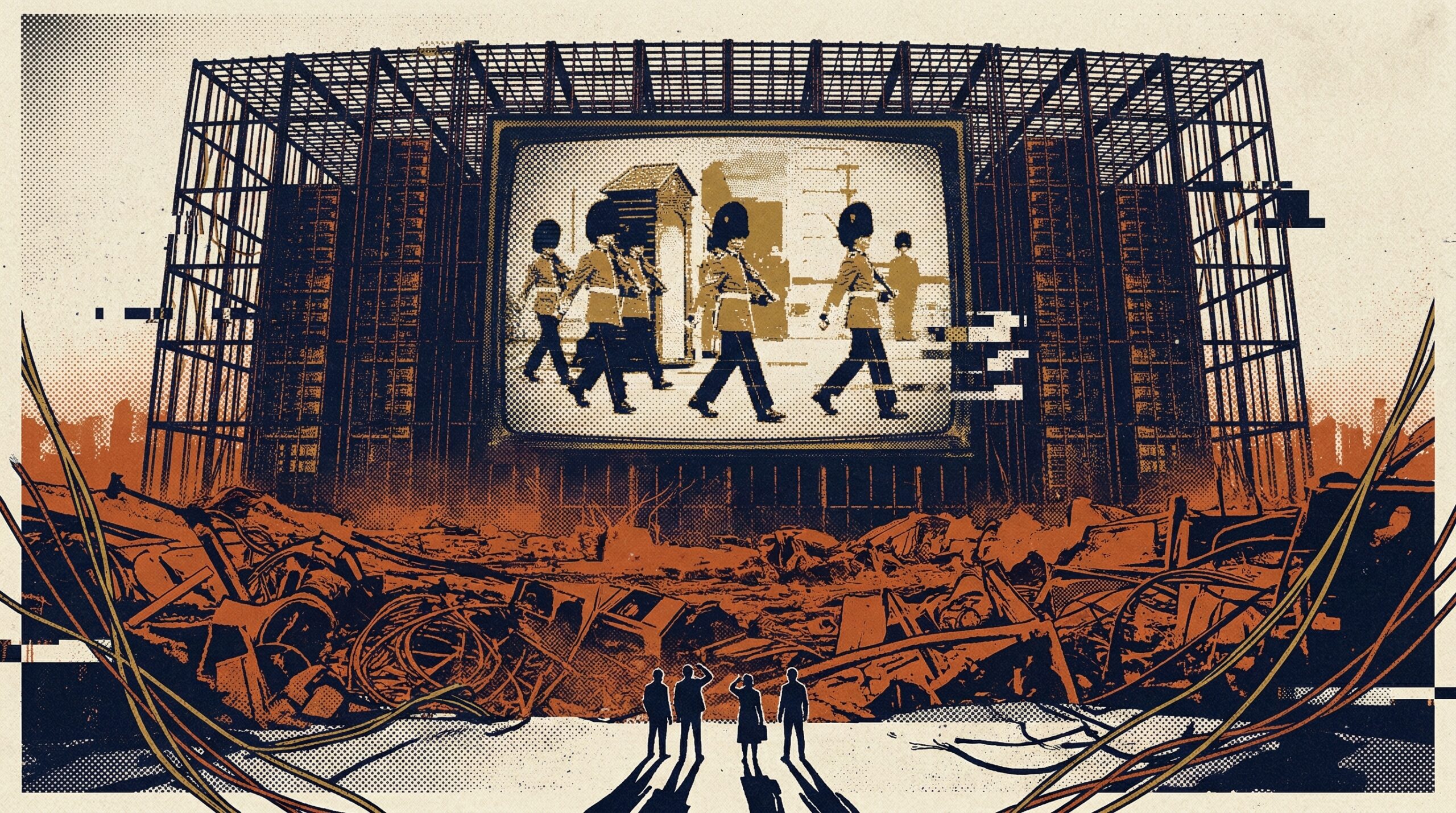
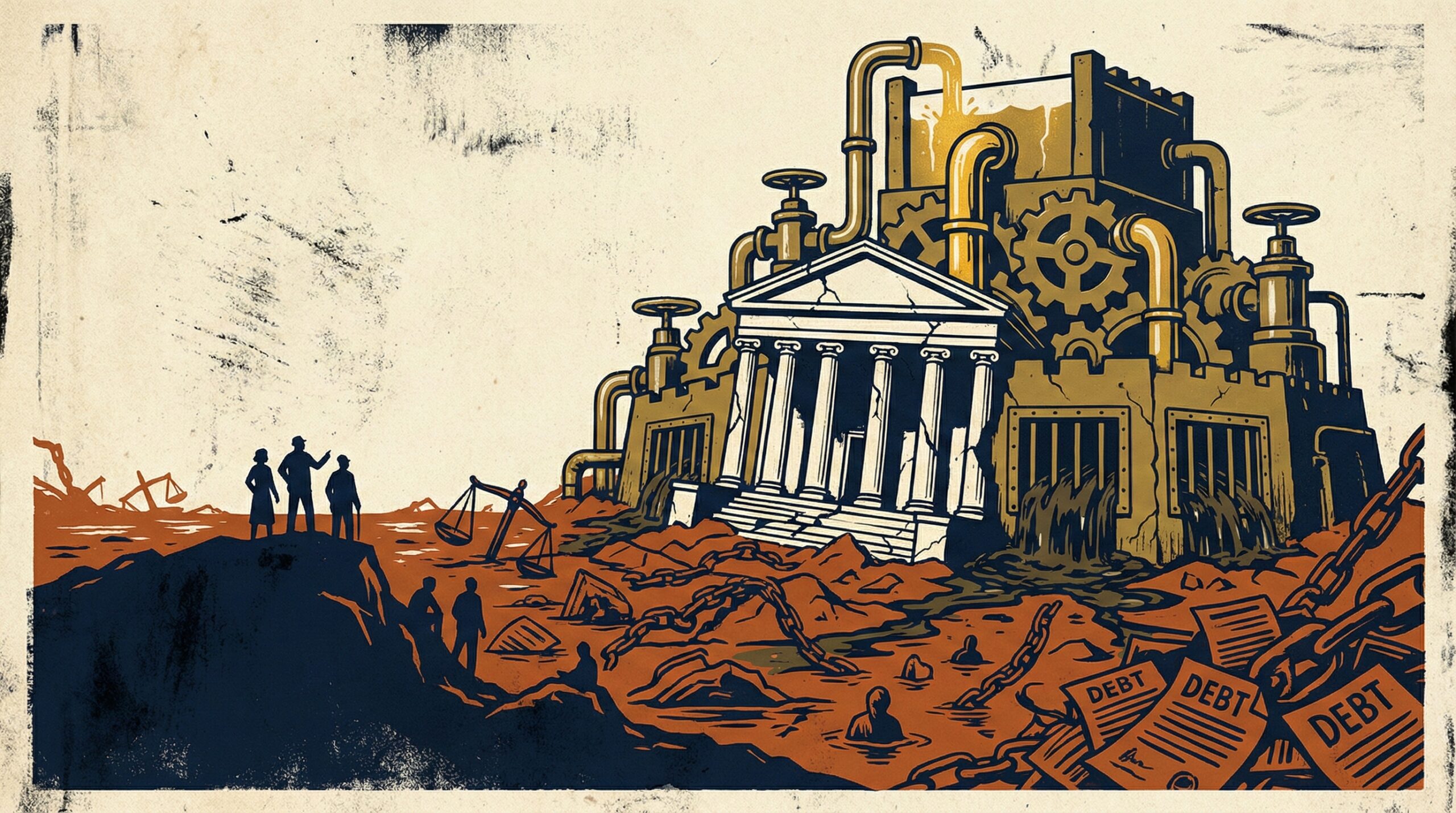
The engine here runs on dependency, and the dependency was not an accident — it was geology and history. Cuba imports the vast majority of its fuel. For two decades, that fuel came primarily from Venezuela under a subsidized arrangement. After the U.S. intervention in Venezuela in January, in which U.S. forces ousted Maduro, the resulting blockade of Venezuelan oil destined for Cuba left the island without adequate supply. That was the main artery. Once it was cut, the patient started bleeding.
Step two was the tourniquet on the collateral arteries. Executive Order 14380, signed January 29, 2026, declared a national emergency and authorized tariffs on goods from countries that sell or provide oil to Cuba. This didn’t just sanction Havana — it threatened anyone who might hand Havana a can of gasoline. Mexico, the next-largest supplier, was the explicit target. With Mexico now supplying more oil to Cuba than any other country, the EO posed a risk for additional U.S. tariffs imposed on Mexican products.
Then the legal foundation cracked — on February 20, 2026, the Supreme Court held that IEEPA does not authorize the president to impose tariffs, in a 6-3 decision — but here’s where the machine reveals its most instructive feature: the damage was already done. The tariff system was eliminated just three weeks after its creation, but the mechanism of indirect pressure had already achieved its purpose. The threat did the work. Third-party suppliers who had stopped shipping didn’t resume. The national emergency declaration remains in force, maintaining other sanctions and vessel-inspection powers. The legal tool was invalidated, but the chill it created is still freezing the pipes.
The result on the ground is cascading system failure. Cuba has not received oil shipments in more than three months and is operating on solar power, natural gas, and thermoelectric plants. The highways are empty. The government has had to postpone surgeries for tens of thousands of people. Cuba is running on about 40% of the fuel it needs, and that figure is dwindling daily as no fuel is entering the country. When Monday’s grid collapsed entirely, by Monday night, state-owned media reported that crews had restored power to just 5% of Havana’s residents — roughly 42,000 customers — and several hospitals. As of today, power had returned to roughly 55% of customers in Havana and all health centers across the capital.
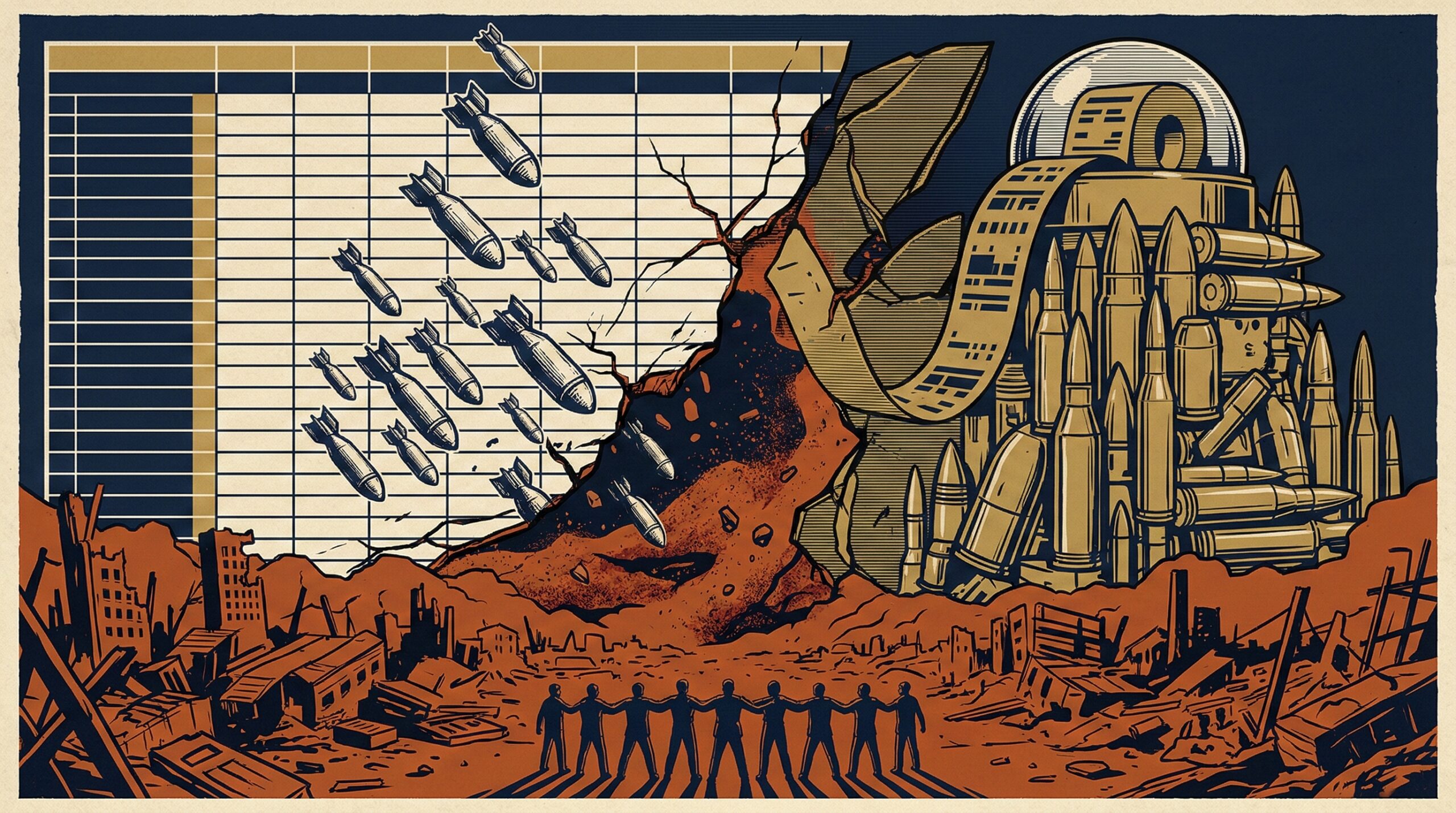
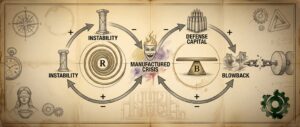
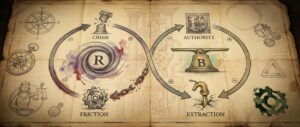
The friction architecture is layered: the embargo (since 1962) is the bedrock; Helms-Burton (1996) is the legal concrete poured over it, codifying conditions for removal that amount to regime change; the Venezuela intervention severed the primary workaround; and the EO 14380 tariff threat cauterized the remaining supply routes. Each layer makes the next harder to reverse. Each layer has a different legal authority, so striking one down (as the Court did) doesn’t collapse the structure.
The Bypass: Havana resident Dayana Machin told Reuters that civilians should prepare themselves with wood-burning stoves, solar panels for those who could get them, and water reserves. Cuba announced on the day of the blackout that it would allow foreign investment for the first time, and the government announced measures including allowing Cubans residing abroad to be partners or owners of private companies in the country and to participate in large-scale infrastructure projects. These are adaptations under extreme duress — the mycelium pushing through cracked concrete. Whether they represent genuine liberalization or survival theater remains to be seen.
The Sword (The Strategic Matrix)
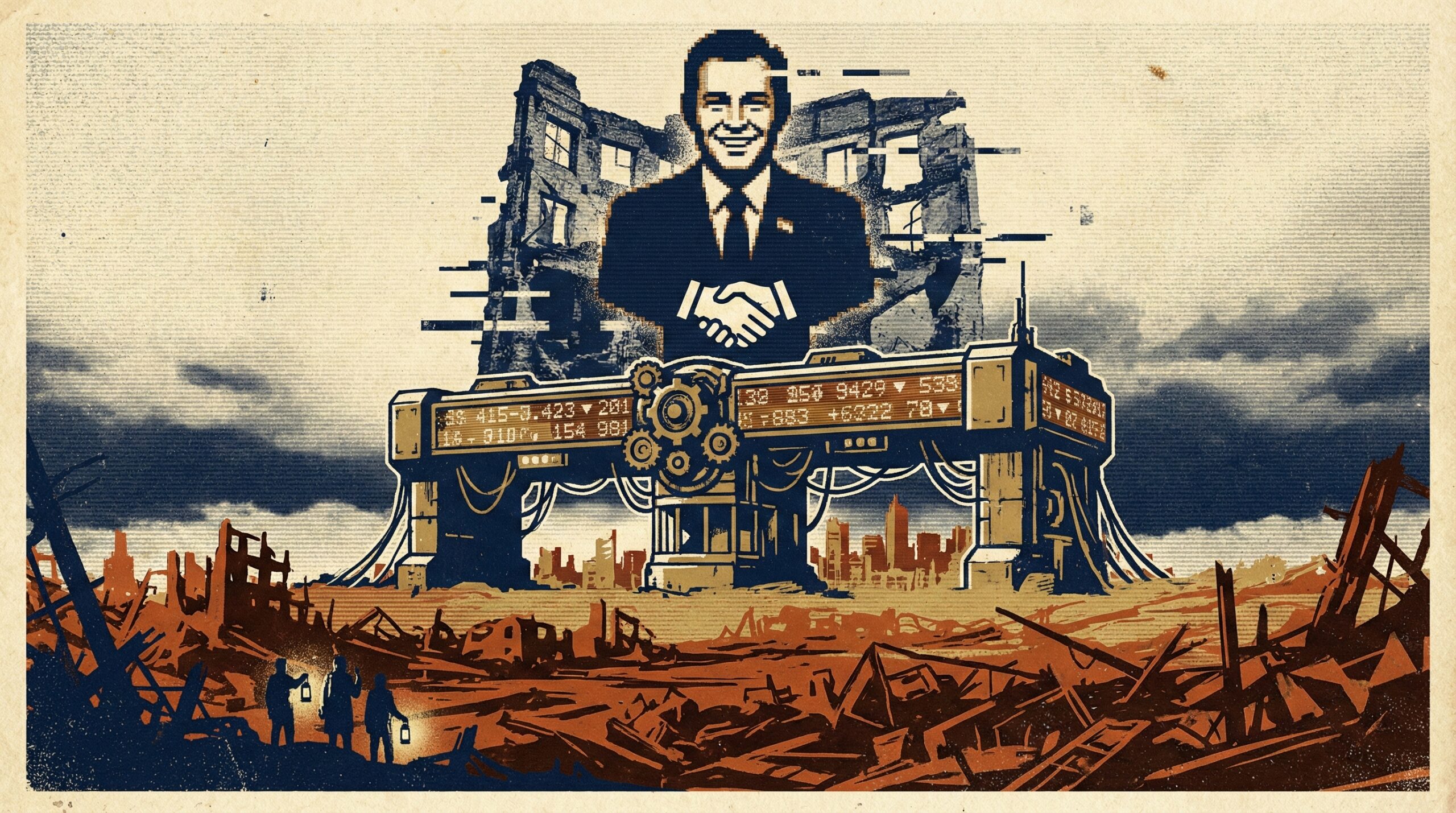
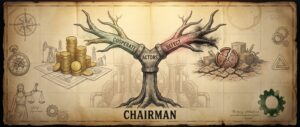
The Weapon & The Blind Spot: This extraction is designed, not emergent. The architects are identifiable and they’ve signed their names to the blueprints. Secretary of State Rubio testified before the Senate Foreign Relations Committee that regime change is a precondition to lifting the embargo under the Helms-Burton Act. Trump told reporters he believes he’ll have “the honor of taking Cuba,” adding he thinks he can “do anything I want with it.” The New York Times reported that Trump’s negotiators told their Cuban counterparts that Díaz-Canel must be removed from power. The objective is not ambiguous; it has been stated on the record, repeatedly, by the people holding the valve.
The information gap is severe. The U.S. has satellite tracking of every tanker in the Caribbean. It has Treasury Department visibility into the banking relationships of every potential supplier. Cuba’s government, by contrast, cannot tell its own population how much fuel it has left with any precision — Díaz-Canel said the country was running on about 40% of the fuel it needs, a number that is itself an estimate. The side with the data chooses when to tighten and when to ease. The side without the data can only react.
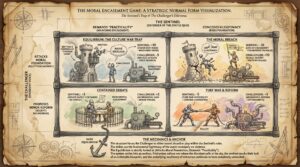
The Game: The trap is sequential and asymmetric. Washington moves first (cut Venezuela, threaten suppliers, declare emergency), and Havana can only respond to conditions it didn’t set. The “negotiation” is structured such that the cost of rejecting U.S. demands falls on Cuban civilians, not on Cuban officials or on the U.S. Each day without oil raises the price of saying no — but the thing being demanded (regime change) is the one concession the regime cannot make incrementally. You can release prisoners in batches; you cannot remove yourself from power in batches. This creates a ratchet: the pressure only increases, and the demanded concession is binary.
The back-channel through Raúl Castro’s grandson, who is not a senior leader of the Cuban Communist Party, is itself a blade. If Washington is negotiating the island’s future with a family member rather than the formal government, it signals that the formal government is already being treated as expendable. This is creating institutional paralysis, with mid-level officials suspecting the regime’s future is being negotiated above them.
The Wound & The Mycelium: The people bearing the cost are specific. A 61-year-old Havana resident said the relentless outages make him think that Cubans who can should just leave the island, saying “What little we have to eat spoils. Our people are too old to keep suffering.” The wounded are the elderly who can’t flee, the patients whose surgeries were postponed, the families buying food daily because refrigeration is gone. The regime officials the pressure ostensibly targets still have generators.
The mycelium: Neighbors from various neighborhoods took to the streets, banging pots and pans, shouting “Freedom!” — seven consecutive nights in Havana, a student sit-in at the university, and the Morón uprising. Residents took to the streets, reached the Communist Party headquarters, entered the building, and began burning furniture in the street. This is not organized opposition — it is spontaneous rupture under pressure. The cooperation is horizontal, neighborhood-to-neighborhood, and fragile. It has no institutional protection.
The Phantom (The Evidence)
The Test: The narrative frame — “freeing Cuba” — is doing load-bearing structural work. The mechanism is collective punishment through energy deprivation. When Trump says “whether I free it, take it — I think I can do anything I want with it”, the slippage between “free” and “take” is not a verbal tic; it is the quiet part. The legal setback is the telling data point: the Supreme Court ruled the tariff mechanism was unlawful, and the administration terminated all IEEPA tariffs, but the blockade holds because the threat already reshaped supplier behavior, and the national emergency declaration remains in force, maintaining vessel-inspection authority and other sanctions. The formal instrument was struck down; the practical effect persists. The machine runs without the part that was supposed to make it legal.
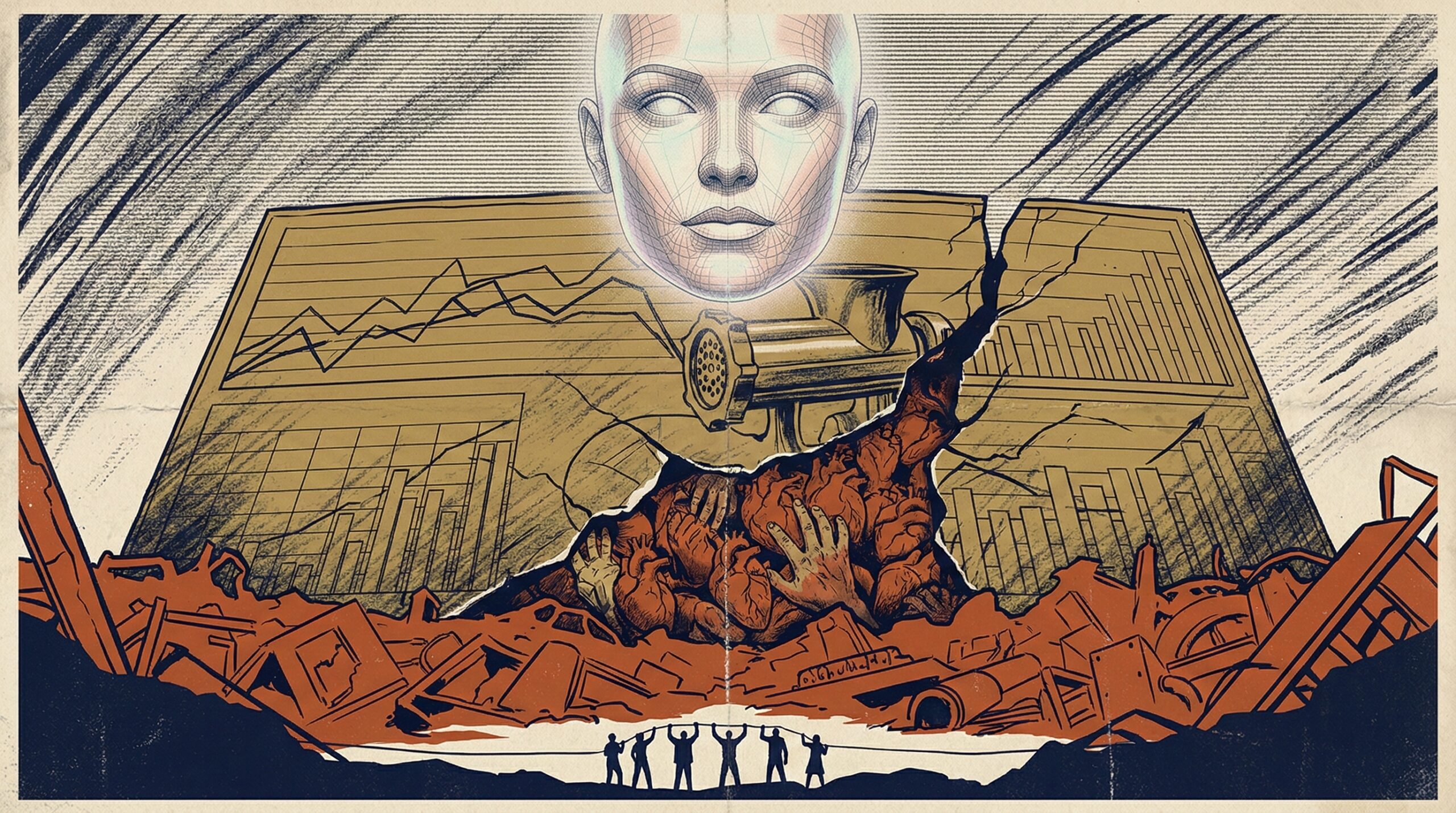
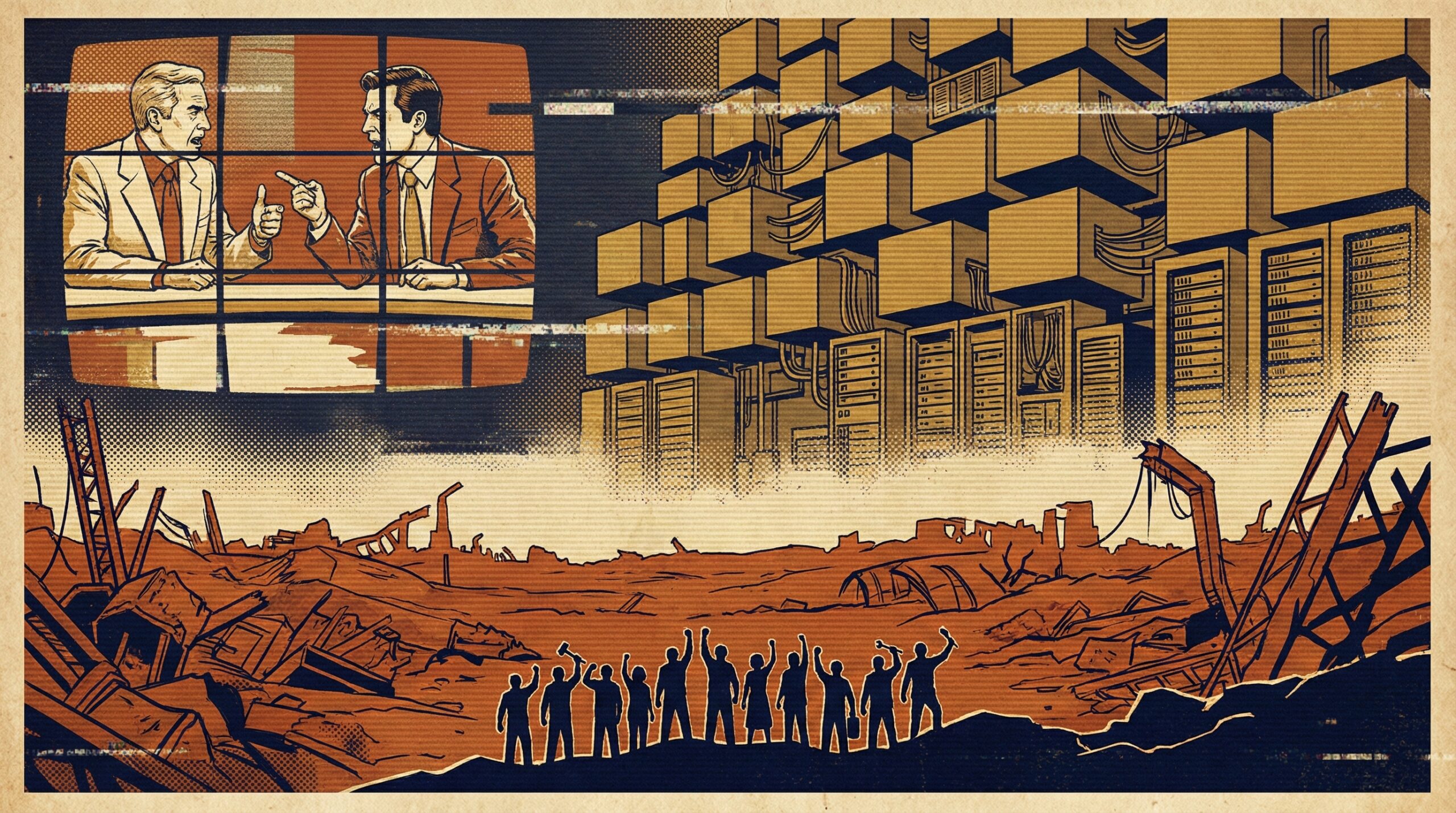
The Verdict: This is Manufactured Friction layered with Strategic Silence. The friction (no oil, no grid, no water pumps) is architecturally constructed through sequential policy actions. The silence is the gap between the “liberation” narrative and the humanitarian mechanism — the fact that tens of thousands of postponed surgeries, compromised blood storage, and failing water systems are treated as background noise rather than as the primary story.
III. THE COUNTERWEIGHT
The Steel Man: The strongest good-faith defense runs like this: Cuba’s government has had 60+ years to diversify its energy infrastructure and chose not to. The grid infrastructure is “way past its normal useful life” and hasn’t been properly maintained — the technicians keeping it running are “magicians” given its condition. The dependency on Venezuelan subsidized oil was itself a political choice — a bet on ideological solidarity over energy sovereignty. The regime has consistently prioritized political control over economic reform, shelving liberalization since 2011. The current crisis is the bill coming due for decades of mismanagement, not solely the product of U.S. pressure. The Helms-Burton conditions for lifting the embargo — democratic transition — represent a legitimate policy goal shared by many Cuban exiles and dissidents. The protests in Morón and Havana demonstrate that ordinary Cubans want change; the U.S. is arguably accelerating a transition that the Cuban people themselves are demanding. And the administration did offer a legal pathway: negotiate, release prisoners, transition. The pressure is harsh, but so is the regime it targets.
The Ruling: The Steel Man holds on several dimensions. The infrastructure argument is structurally sound — Cuba’s grid was failing before the blockade, and the regime’s decades of underinvestment are a genuine contributing cause, not an excuse manufactured to deflect. Cuban officials have previously attributed blackouts to U.S. economic sanctions, though critics have also faulted a lack of investment in the island’s ailing generation system. The pre-existing rot is real. The Steel Man also holds on the question of Cuban agency: the regime had choices, over decades, that it didn’t make.
Where it breaks: the argument that pressure “accelerates” a desired transition confuses destabilization with transition. Cutting off fuel to hospitals and water pumps does not build democratic institutions; it destroys the material conditions under which any stable transition — democratic or otherwise — could occur. An expert warned that without oil shipments, “the economy could collapse just completely and then you would have social chaos and probably mass migration” — chaos is not freedom. The demand for regime change as a precondition for relief creates a logical trap: the thing that would end the suffering is the one thing the current power structure cannot deliver voluntarily, and the suffering itself degrades the capacity of any successor structure to govern. You cannot build a house by first burning down the neighborhood.
The Steel Man also cannot account for the language. When the stated objective slides from “free” to “take” to “I can do anything I want with it,” the liberation frame collapses under its own weight. That is not the language of democratic aspiration. That is the language of acquisition.
Net adjustment: The infrastructure decay and regime mismanagement are real, independent variables that earn a partial hold. This lowers the Friction Index attribution — not all the friction is manufactured; some of it was self-inflicted over decades. But the acute crisis — three months without any oil shipments — is externally imposed, deliberately sequenced, and its humanitarian cost is falling on the people least responsible for either the regime’s failures or the geopolitical standoff.
IV. THE SOLVENT
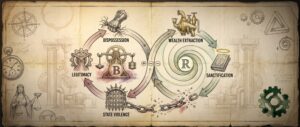
Strip the flags, the Cold War mythology, the liberation rhetoric, and the revolutionary slogans from both sides. What remains is this: a country of 11 million people has had its primary energy source severed by a more powerful neighbor that has stated, on the record, that it wants to acquire or control the island. The legal mechanism for the severance was struck down by the severing country’s own highest court, and the severance continues anyway. The people paying the price — in spoiled food, in dark hospitals, in water that doesn’t flow — are not the people on either side of the negotiating table. The grid was already cracked from decades of neglect, which is the regime’s own doing. But the fuel starvation that pushed a cracked grid into total collapse was a choice made in Washington, with identifiable authors and a stated objective. Both things are true. The crack was Cuba’s; the hammer was America’s.
V. THE LEDGER
DEBIT (The Cost): 11 million Cuban civilians — particularly the elderly, the sick, and those outside Havana — who are losing access to electricity, clean water, refrigerated food, and medical services.
CREDIT (The Profit): U.S. geopolitical leverage in the Caribbean; potential post-transition economic access to Cuban land, infrastructure, and markets; and domestic political capital for the administration among Cuban-American constituencies in Florida.
NET VERDICT: The U.S. is using civilian energy deprivation as a transmission mechanism to force regime change, and the humanitarian cost is being borne by the population the policy claims to liberate — while the legal basis for the key pressure tool has been judicially invalidated and the pressure continues regardless.
VI. THE ELIXIR
The Hammer (Disruption): The legal crack is real and under-exploited. The Supreme Court ruled the tariff mechanism unlawful. The fact that third-party suppliers are still not shipping represents a chilling effect, not a legal mandate. Legal challenges to the continued national emergency declaration, combined with direct diplomatic engagement by supplier nations (Mexico, third parties), could test whether the blockade survives without its original enforcement mechanism. Congressional action to condition the emergency powers or to challenge the Helms-Burton preconditions is the structural lever — it changes the machine, not just the operator.
The Hearth (Restoration): Cuba’s announcement of foreign investment and diaspora participation is the seed of a bypass, but only if it’s real and not a hostage concession that gets reversed once pressure eases. A genuine commons-rebuilding path would involve distributed energy infrastructure — solar, which Cuba has begun exploring — that reduces the single-point-of-failure dependency on imported oil. International humanitarian corridors for fuel designated exclusively for hospitals and water systems, brokered through neutral parties (the Vatican is already involved in prisoner releases), could separate civilian survival from the geopolitical chess match. The mycelium — the neighborhood solidarity, the pot-banging networks, the students at the university — is the civic infrastructure that could survive either outcome. Protecting it means ensuring that whatever transition comes, it is not imposed from above by either Havana or Washington.
VII. THE REALITY SCORECARD
| Metric | Severity | Justification | The Archive (Evidence) |
|---|---|---|---|
| Friction Index | HIGH | The acute friction — total fuel cutoff — is externally imposed and architecturally sequenced. However, the underlying grid decay is partially self-inflicted through decades of regime underinvestment, which prevents a CRITICAL rating. | CNN, NPR, NBC reporting; SCOTUS ruling Learning Resources v. Trump; Holland & Knight analysis |
| Extraction Index | HIGH | The value being extracted is geopolitical leverage and potential post-transition economic access, paid for in civilian welfare. The extraction is systematic but has not yet reached total enclosure. | PBS, Al Jazeera, Wikipedia compilation of crisis timeline |
| Asymmetry Risk | CRITICAL | The information and power gap is near-total. The U.S. controls tanker tracking, banking access, and supplier relationships. Cuba cannot see its own supply chain clearly. | Miami Herald (Castro grandson back-channel); Drop Site News; Holland & Knight |
| Dependency Index | CRITICAL | Cuba generates over 90% of its electricity from oil it cannot currently import. No meaningful alternative supply route exists. The dependency is structural, and the exits are being sealed. | NPR, PBS, CNN reporting; Cuba government statements on 40% capacity |
FINAL STAMP: REJECT
A policy whose stated mechanism is civilian energy deprivation, whose legal basis has been judicially invalidated while the deprivation continues, and whose architects openly describe the target country as something to “take” — fails structural legitimacy, even accounting for the regime’s own failures of governance.